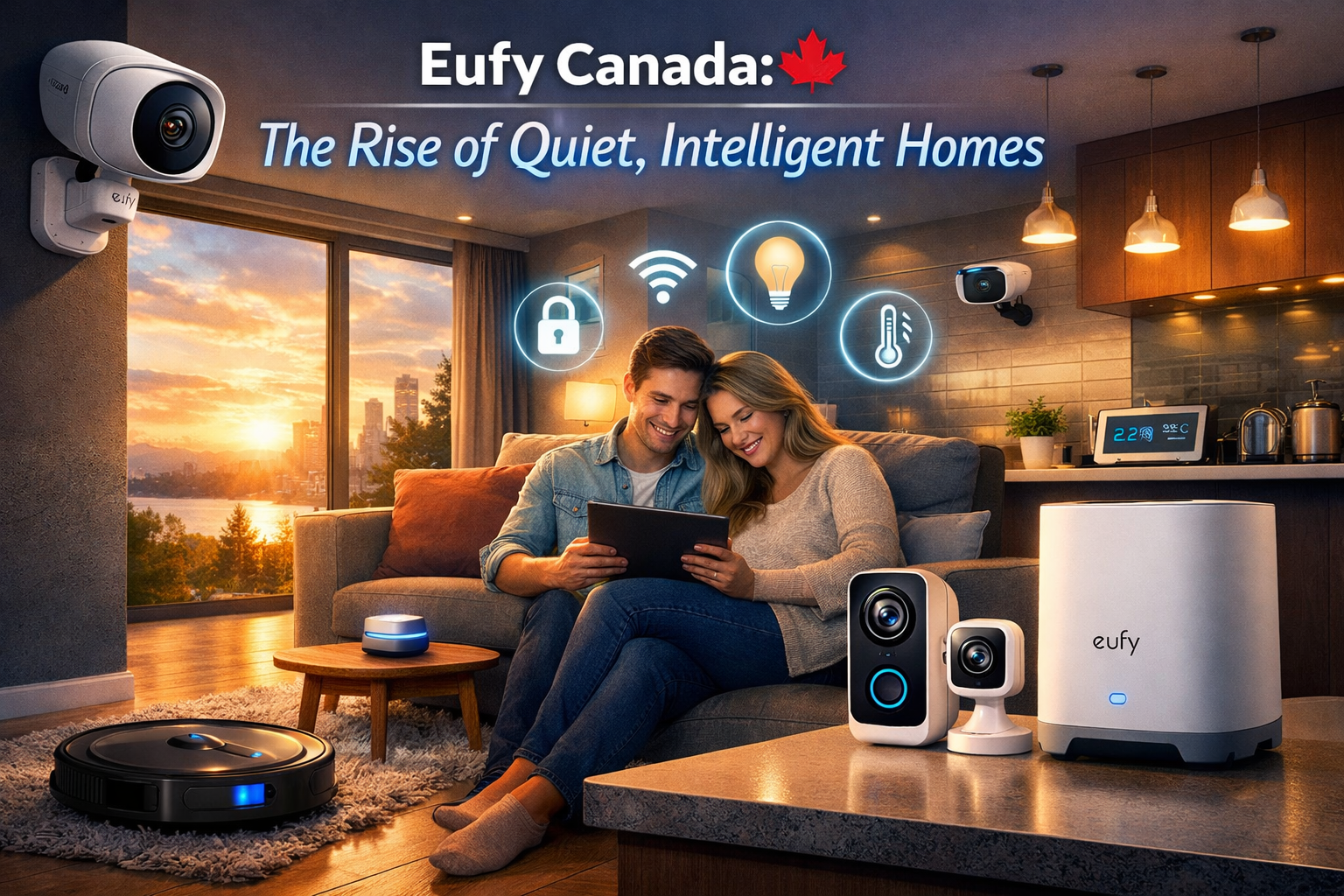
Eufy Canada: The Rise of Quiet, Intelligent Homes
Smart homes in 2026 don’t announce themselves.They don’t blink constantly send endless notifications or demand monthly subscriptions just to function.The most valuable smart homes today are the ones that work quietly locally and intelligently in the background.That’s where Eufy Canada has found its momentum.Instead of positioning itself as a gadget brand Eufy is increasingly being used as AI-powered home infrastructure — handling security cleaning access and daily automation without forcing homeowners into complex ecosystems or recurring fees.This guide explores why Eufy’s approach feels particularly relevant in 2026 how its ecosystem works in real homes and where it fits in the future of smart living in Canada.
Why Smart Homes Feel Different in 2026
The smart home conversation has shifted.
Five years ago it was about:
- Voice assistants
- Remote control
- Basic automation
In 2026 it’s about:
- Local AI
- Privacy-first design
- Automation without micromanagement
- Reducing cognitive load not adding to it
Canadian homeowners want systems that:
- Work during power or internet interruptions
- Don’t charge monthly fees forever
- Handle weather pets families and busy schedules
- Eufy’s ecosystem aligns closely with these expectations.
Eufy Canada’s Core Philosophy: Ownership Over Subscriptions
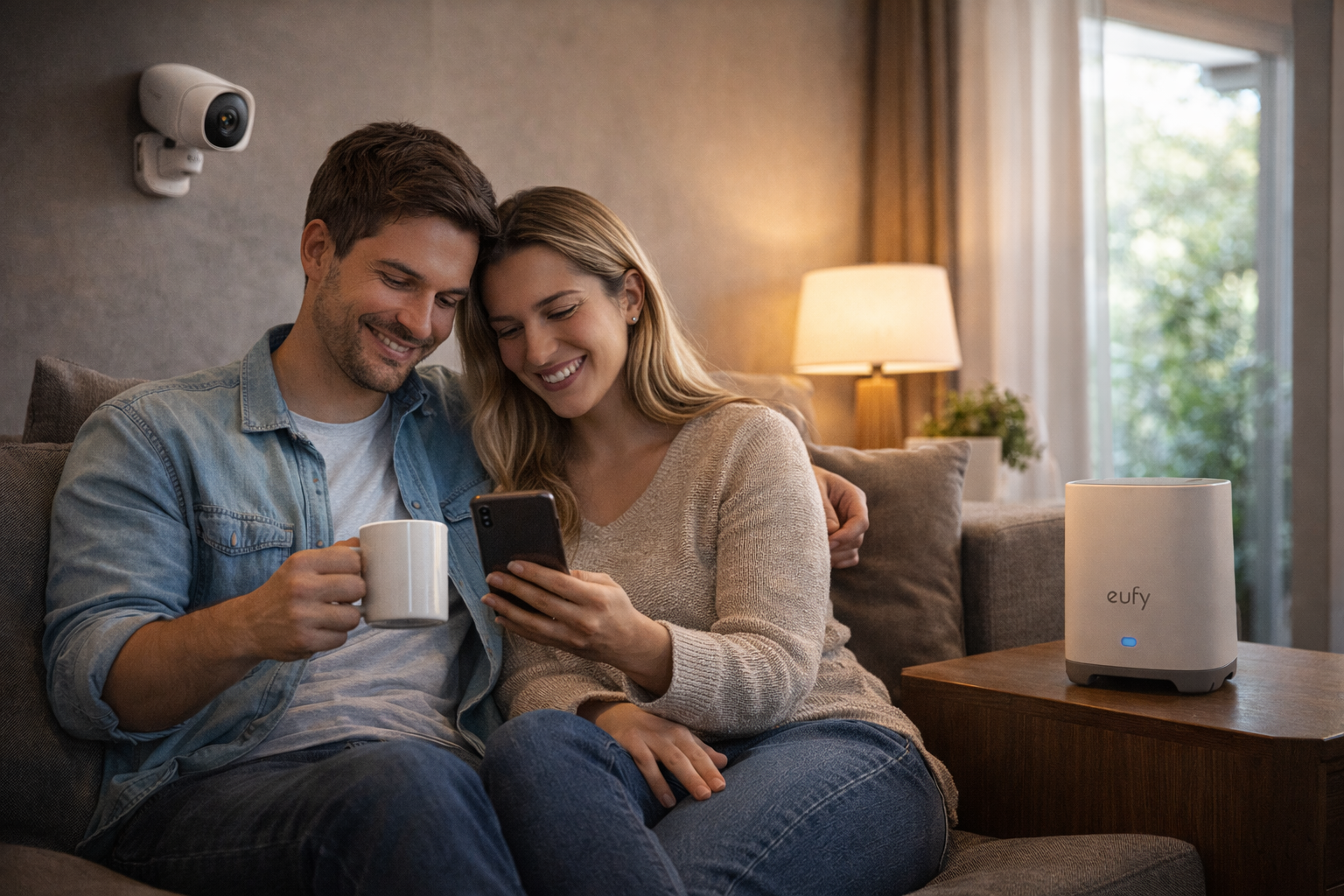
One of the biggest reasons Eufy resonates in 2026 is its stance on ownership.Many smart home brands now lock essential features behind:
- Monthly cloud plans
- Premium AI tiers
- Device-specific subscriptions
Eufy takes a different route.
What This Means Practically
- Cameras process motion locally
- Footage is stored on-device or via HomeBase
- AI detection works without constant cloud access
For homeowners this translates to:
- Lower long-term costs
- Fewer privacy trade-offs
- More predictable ownership
In an era of subscription fatigue this is no longer a minor advantage — it’s a buying decision.
Security That Thinks Locally Not Remotely
- A Typical Scenario
- You’re away for the weekend.
- A delivery arrives.
A person approaches your door.
With traditional systems every movement triggers an alert.
With Eufy’s AI-based detection:
- People are recognized as people
- Vehicles are recognized as vehicles
- Random motion is filtered out
This reduces alert fatigue and increases trust in notifications.
Why This Matters in Canada
- Snow shadows and wildlife cause false alerts
- Weather changes rapidly
- Homes often have multiple entry points
Local AI allows the system to adapt without constant cloud reliance.
Smart Access: Beyond Keys and Codes
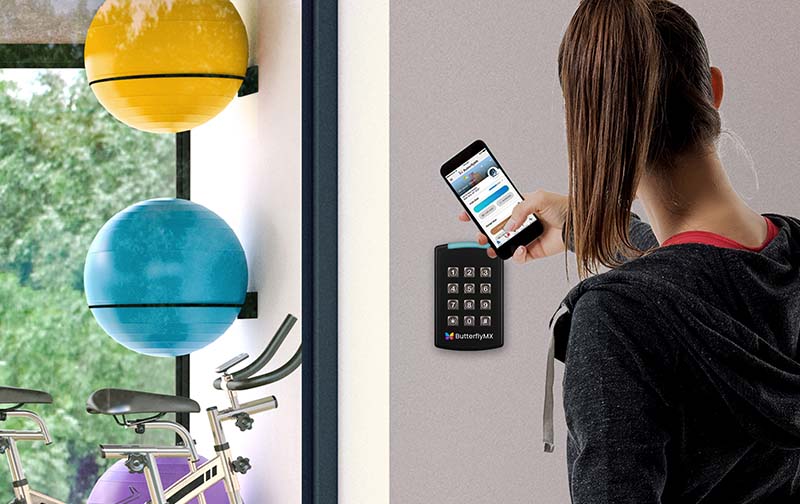
Smart locks are no longer about convenience alone.
In 2026 they’re about:
- Temporary access
- Verified entry
- Auditability
Eufy’s newer smart locks reflect this shift incorporating:
- Biometric access
- App-based permissions
- Advanced recognition methods
The introduction of palm vein recognition reflects where access control is heading — contactless difficult to replicate and frictionless for daily use.
This is particularly relevant for:
- Families with children
- Short-term guests
- Home service access
Cleaning Automation That Disappears Into Daily Life
Robot vacuums used to feel like gadgets you managed.
In 2026 the expectation is:
“I shouldn’t think about cleaning.”
Eufy’s latest cleaning systems focus on:
- Autonomous navigation
- Self-maintenance
- Adaptive scheduling
High-suction models combined with AI mapping allow cleaning to happen:
- While you’re at work
- While you sleep
- Without daily oversight
For Canadian homes dealing with seasonal debris pets and indoor living during winter this hands-off approach is more than convenience — it’s practical.
The App as a Control Layer Not a Distraction
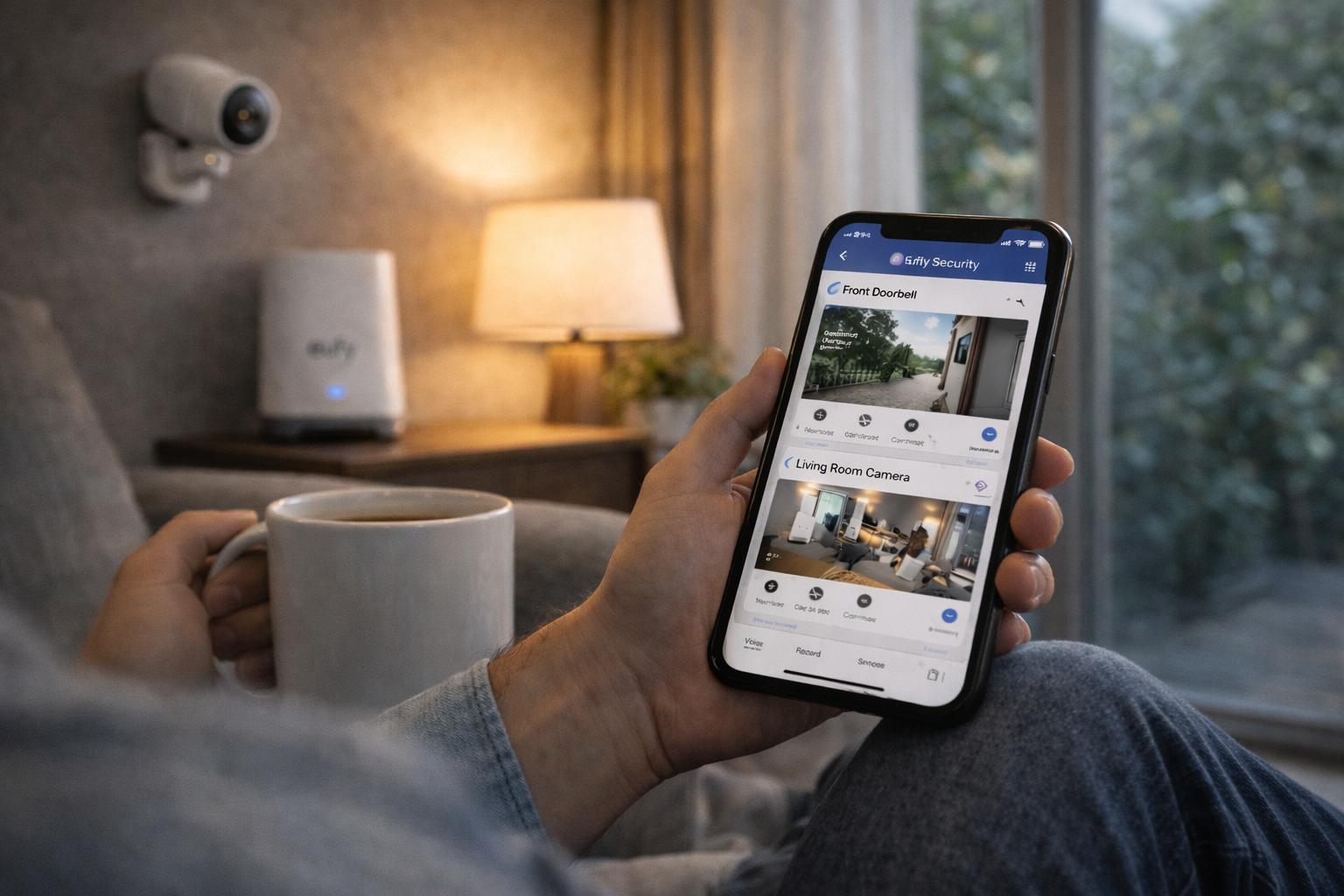
One of Eufy’s underrated strengths is its single-app ecosystem.
Instead of managing:
- One app for cameras
- One for locks
- One for vacuums
Eufy centralizes control.
In 2026 this matters because:
- Smart homes are more complex
- Fewer apps mean fewer points of failure
- Automation becomes easier to scale
With Matter support expanding Eufy is positioned to integrate into broader ecosystems without forcing users into lock-in.
Real Homes Real Use Cases
Urban Homes
- Doorbell + outdoor camera
- Smart lock with access logs
- Compact robot vacuum
Suburban Families
- Perimeter cameras
- Indoor monitoring for kids
- Automated daily cleaning
Pet Owners
- High-suction vacuums
- AI obstacle avoidance
- Scheduled cleanups during shedding seasons
Privacy-Conscious Buyers
- Local storage
- No forced subscriptions
- Minimal cloud dependency
Where Eufy Stands Against Competitors
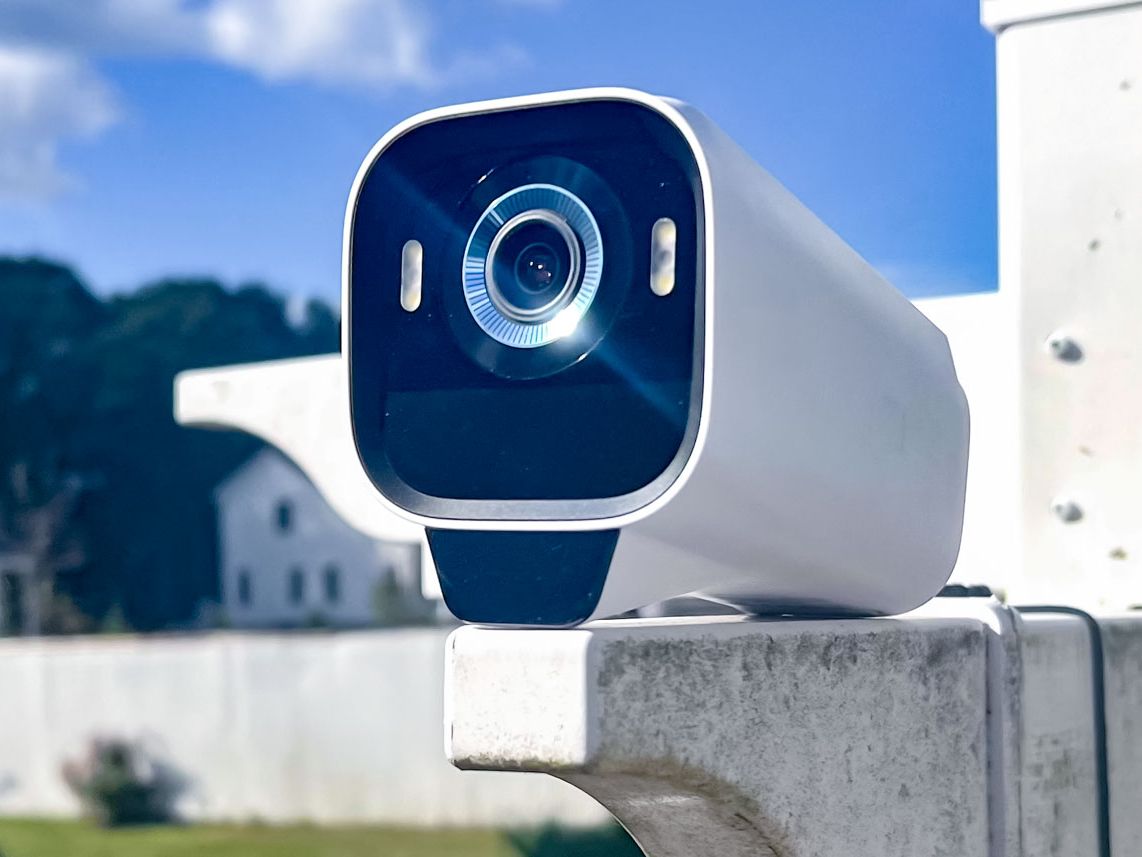
Compared to Ring Nest and Arlo:
- Eufy emphasizes local intelligence
- Competitors emphasize cloud ecosystems
- Eufy reduces long-term costs
- Competitors offer deeper cloud analytics
This makes Eufy particularly attractive to buyers who:
- Prefer ownership
- Want predictable costs
- Value privacy
The Trade-Offs to Understand
No ecosystem is perfect.
- Considerations Before Buying
- Customer support experiences vary
- Some advanced features are model-specific
- Professional monitoring is limited compared to alarm-centric brands
These aren’t deal-breakers but they are part of informed ownership.
How to Build a Future-Proof Eufy Home
Start small:
- One camera
- One vacuum
- One lock
Then expand gradually:
- Add automation
- Integrate lighting
- Enable routines
This modular approach matches how smart homes are evolving in 2026 — adaptive not overwhelming.
Final Perspective: Why Eufy Feels Timely in 2026
Eufy Canada isn’t trying to be the loudest smart home brand.
It’s positioning itself as:
- Quiet
- Intelligent
- Privacy-conscious
- Ownership-focused
In a future where smart homes are expected to work without attention that philosophy feels increasingly aligned with real-world needs.
For Canadian homeowners seeking intelligent automation without subscription overload Eufy remains a compelling ecosystem to consider in 2026.